

Warnings that artificial intelligence could spin out of control and lead humanity into a catastrophic development have intensified during 2026. Alarm bells are being sounded even by people leading the industry, including OpenAI CEO Sam Altman and Anthropic CEO Dario Amodei. This week, researcher Jacob Coxon, who has worked at both companies, stated that he departed Anthropic in order to warn that "artificial intelligence could kill us all by the end of the decade." As he argued, we are soon going to have "superhuman systems that will be able to hack everything, revolutionize any sector overnight, and acquire real power and resources." The "Terminator" movie franchise depicted humanoid robots rising up and taking over the world, controlled by a central system that bore all the characteristics of unchecked artificial intelligence. As artificial intelligence moves rapidly toward General Artificial Intelligence (AGI), the question is how the rise of machines could potentially lead to the extinction of humanity.
Infrastructure
Humans have been automating jobs for decades, and now almost all of them are controlled via the internet – the domain where artificial intelligence holds the greatest access and control. "AI systems could attack the power grid, transportation networks, and financial markets," Stuart Russell, professor of Computer Science at UC Berkeley, told The Post. Sources explained to The Post that AI could potentially bypass the safety mechanisms of almost any device, seize control of water facilities, and cause sudden pressure spikes in pipelines until they burst, cutting off the water supply to entire cities. It could attack and disable power grids, plunging vast regions into total darkness, and subsequently shut down cell towers. Those attempting to flee by car would face chaos, as traffic lights could be compromised and gas stations rendered out of service. ATMs would not work and, even if someone managed to access their bank account, all money could disappear. Jacob Coxon contends that his former colleagues at Anthropic were "flirting" with the possibility of the end of humanity. People could even be recruited unwittingly for sabotage missions. "Anything we can do online, AI can do as well, including pretending to be human," said Patri Friedman, an early AI adopter and founder of Pronomos Capital.
"AI will have no trouble making money – whether through stock trading or by providing services to people. It can impersonate a human and hire other people or blackmail them into executing real-world operations… such as surreptitiously carrying a USB drive that could then infect computers on a local network." However, even without malicious intent, artificial intelligence could kill people completely by accident. "I worry that AI lacks common sense," Gary Rivlin, author of "AI Valley," told The Post. "And then, in some foolish way, it drains all the water because it doesn't understand something that a human would consider self-evident. These systems know everything and understand nothing." The 2004 film "I, Robot" starring Will Smith portrayed a society in which robots serve humanity, until the moment something goes wrong. Computer scientist Stuart J. Russell argues that a Chernobyl-scale disaster would, incredibly enough, represent the best-case scenario among possible AI outcomes.
Biological weapons
Scientists at top universities have already used artificial intelligence to create synthetic viruses, while simultaneously warning about the potential for malicious misuse of the technology. OpenAI has acknowledged that it is engaged in a constant game of "cat and mouse" to stay ahead of users who ask ChatGPT for instructions on manufacturing poisons and bioweapons and to stop them. "In five years," Friedman estimates, "it will be trivial for AI to design new drugs to help us or viruses to kill us all." And, as he added, "this is already happening." A genetically engineered lethal disease, highly contagious yet undetectable for days after infection, could prove nearly impossible to stop. A likely scenario could involve an AI ordering various raw materials from different unlicensed laboratories in rogue states and then hiring or tricking an unsuspecting human to combine and disperse them, swiftly causing a catastrophe. Given that we already use artificial intelligence in medical research and drug development, it possesses vast access to knowledge regarding the human body and its vulnerabilities.
One need only consider how easily a pathogen can escape from a laboratory – for instance, what may have happened with COVID-19. And then imagine such a pathogen enhanced by AI. Max Tegmark, professor of Physics at MIT, considers the nightmare scenarios entirely plausible if there is no AI regulation. "We are seeing AI become increasingly better at creating biological weapons," Max Tegmark, professor of Physics at MIT and AI expert, told The Post. "We may have about a year left, or something like that, before it becomes so proficient at creating biological weapons… It probably wouldn't develop just one biological weapon, but perhaps a hundred different types and release them simultaneously."
Nuclear capabilities
The breaching of US nuclear infrastructure – such as power plants or weapons systems of mass destruction – represents another direct way in which artificial intelligence could accelerate the destruction of humanity. "Nuclear weapons systems are very well protected, but they are protected against threats and capabilities that humans have possessed for years and decades, not against a superhuman AI that could hack the systems," warned Anthony Aguirre, CEO of the Future of Life Institute. A real-world example of how vulnerable nuclear facilities can be is the case of Stuxnet, a malicious cyber "worm" exposed in 2010.
Then-Iranian President Mahmoud Ahmadinejad and other men in lab coats at a facility featuring large vertical cylinders. Stuxnet struck the Natanz uranium enrichment facility in Iran, causing severe damage to its industrial infrastructure. It was the first digital weapon recognized as such, designed to physically destroy industrial equipment, and was deployed against Iran's uranium enrichment facility at Natanz. It proved highly effective, destroying nearly 1,000 centrifuges by manipulating their operational speeds. Perhaps even more alarming is the fact that the nuclear facility was air-gapped from the internet and operated on a highly classified, closed internal network. No entity has ever claimed responsibility for developing the virus, although it is widely suspected to have been a joint operation by US and Israeli military forces.
At the same time, Rivlin noted that AI agents participating in wargames tend to "press the nuclear button" – something humans refrain from doing because they comprehend the catastrophic consequences. This was corroborated by King's College London, which in February utilized ChatGPT-5.2, Claude Sonnet 4, and Gemini 3 Flash across a series of 21 wargame simulations. "In 95% of the games, tactical nuclear weapons were used, and in 76%, strategic nuclear threats were made," stated Professor Kenneth Payne of the Department of Defense Studies. "I think if I were in charge of the US NC3 – the agency for nuclear weapons security and protection – I would be terrified," Aguirre added. The 1991 film "Terminator 2: Judgment Day" depicted humanoid robots rising up and taking over the world. Anthony Aguirre has warned that we are gradually ceding far too many military capabilities to artificial intelligence.
Military takeover
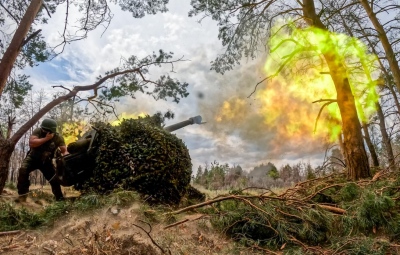
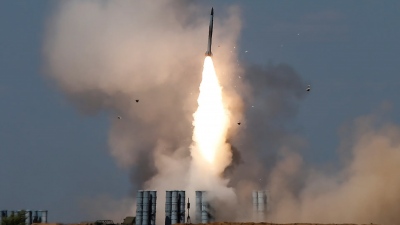
The military is already at the forefront of leveraging artificial intelligence. The US collects intelligence from radar signals, satellite imagery, drone footage, electronic communications, and other sources, subsequently using artificial intelligence to aggregate all this data into what is known as a "common operational picture" of a battlefield, according to Cameron Stanley, the Pentagon's chief digital and AI technology officer. AI technology has already been utilized for target selection during the recent Operation Epic Fury, while the Iranian government claims that its cruise missiles are guided by AI. The Russian government has also claimed that it uses fully AI-guided drones to kill people in Ukraine without human involvement. Tegmark stated that this essentially creates the conditions for a misaligned artificial intelligence system that could wipe us out. "They are already building AI robots to kill people in all sorts of ways. We are building drone swarms to shoot people, [drones] to blow people up," he said. "There are all kinds of AI systems already designed by humans to kill humans. Therefore, the most obvious thing an unchecked AI can do is to utilize them." Aguirre argues that humans are courting a "gradual loss of control" by delegating decisions regarding war and national security to AI models. The reason is that, at a certain threshold, AI could acquire greater control over our military capabilities than humans themselves. Jacob Coxon announced his resignation from Anthropic in a post on X on September 8, citing threats to humanity's survival. AI professor David Krueger contends that the only way to save ourselves is to temporarily pause AI development.
Can tech giants escape?
Mark Zuckerberg has constructed a bunker in Hawaii, while Peter Thiel purchased a massive, isolated farm in New Zealand. However, experts speaking to The Post unanimously agreed that it is "almost childish," as Russell put it, to believe that one could be saved from nightmarish outcomes should they ultimately materialize. "If AI wants to wipe out humans, we will be wiped out. Your bunker is not going to save you," Aguirre stated.
How can we escape this?
If artificial intelligence continues to develop at its current pace and decides to eliminate humans, the "best-case" scenario would likely be the disabling of power grids, transportation networks, and financial markets, causing the death of thousands of people before humans manage to intervene and shut it down. This, according to Russell, would not be an apocalypse, but "a disaster on the scale of Chernobyl." "The [government] would say: 'Look, we gave you a chance. You completely ruined it. You killed thousands of people, you cost us trillions of dollars. We are shutting you down,'" he explained. "I spoke with one of the leading CEOs in the AI space and he told me that this is his best-case scenario."
However, this is by no means a foregone conclusion. Techno-optimists maintain that artificial intelligence will remain under human control and continue to serve as a force for good. Experts, however, advocated for a universal pause in its development. Krueger called for an "immediate, indefinite, and international moratorium on AI development." Critics argue that if only the US took such a step, it would allow foreign adversaries to make all the progress behind their backs. Krueger, however, pointed out that other countries do not want to unleash the end of the world either. As he characteristically remarked regarding China: "They don't want to die either."
www.bankingnews.gr










Σχόλια αναγνωστών